

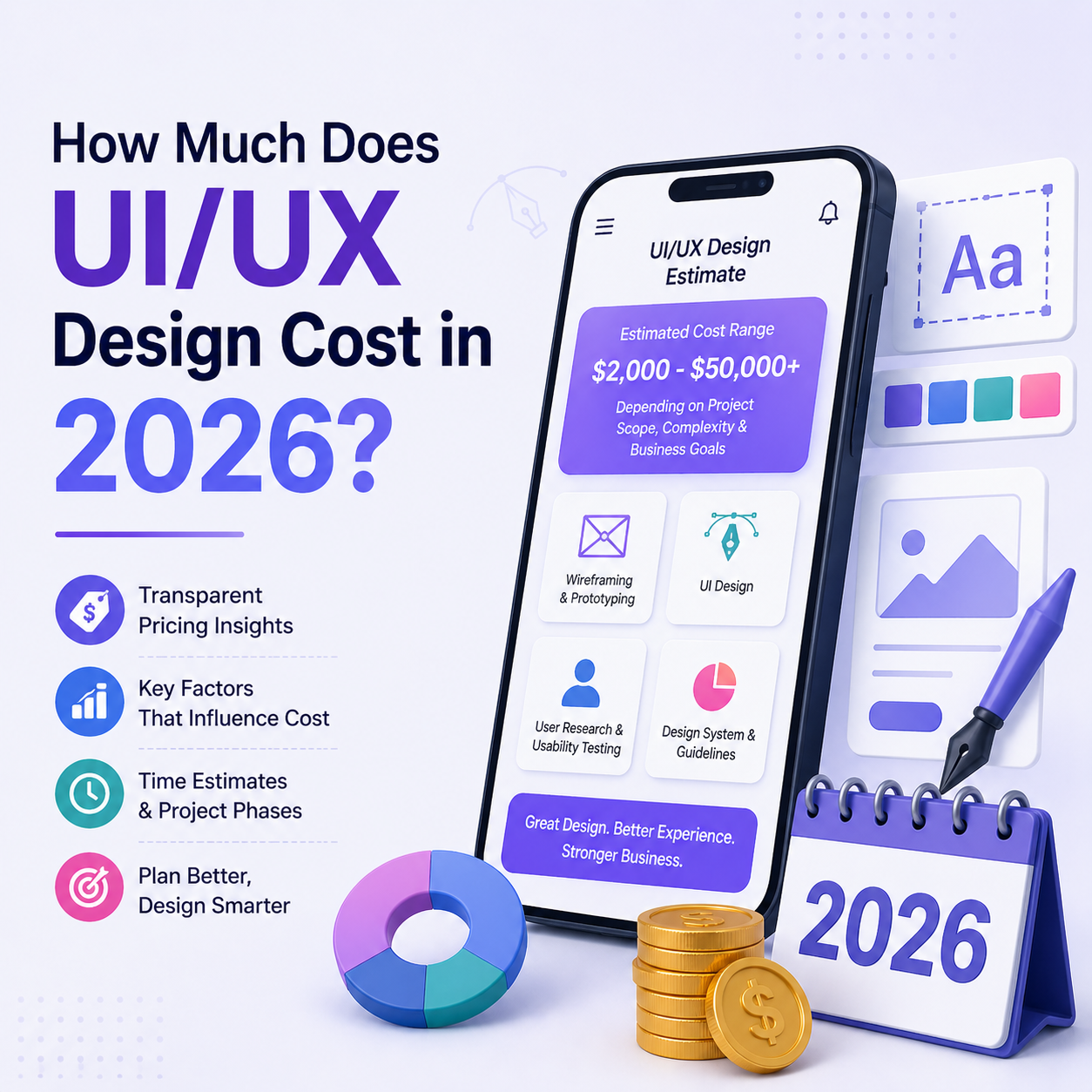
How Much Does UI/UX Design Cost in 2026?
UI and UX work is usually worth more than the number on the quote because it shapes how users understand, trust, and move through a product. Strong design can reduce development waste, improve conversion, and make handoff smoother for engineering.
The right budget depends on whether you need an audit, a few wireframes, a complete product redesign, or a design system that can scale across an entire team.
Quick answer
- UX audits and wireframes often start around $3,000 to $10,000.
- Screen design and design sprints commonly fall between $10,000 and $30,000.
- Full product design and design systems can range from $25,000 to $100,000+.
Typical UI/UX design cost ranges in 2026
| Design scope | Typical budget | Timeline | Best for |
|---|---|---|---|
| UX audit | $3,000 - $8,000 | 1 - 2 weeks | Quick improvements and product reviews |
| Wireframes and flows | $5,000 - $15,000 | 2 - 4 weeks | Planning new pages and journeys |
| Screen design | $10,000 - $30,000 | 3 - 6 weeks | Apps, dashboards, websites |
| Full product design | $25,000 - $100,000+ | 6+ weeks | Large product teams and design systems |
What makes UI/UX design expensive?
The cost goes up when design needs to solve more than visual polish. Research, usability testing, component systems, responsive behavior, and stakeholder revisions all add time and depth to the engagement.
A single screen can be simple. A product with onboarding, dashboards, billing, settings, and edge cases is a much bigger design problem because every flow needs to make sense across devices and user states.
- Research depth: interviews, audits, and persona work.
- Number of screens and states that need design.
- Interactive prototypes for validation.
- Design system creation and handoff documentation.
Hidden costs to plan for
Design projects often appear smaller than they really are because the most visible work is the mockup itself. The real cost can increase when teams add testing, revisions, or post-handoff fixes.
- Extra screens added after scope is approved.
- Accessibility improvements and responsive variants.
- Design system documentation and governance.
- Revision rounds after development begins.
- Ongoing optimization after launch.
How good design saves money later
When IA, user flows, and interaction patterns are clear before coding begins, the development team builds faster and with fewer revisions. That means design is not just a creative expense. It is a risk reduction investment.
For products that need to convert, the value of design is even bigger because a better journey can improve signups, leads, and retention without increasing traffic spend.
- Reduces rework during development.
- Makes user journeys easier to understand.
- Improves conversion and completion rates.
- Creates a stronger handoff for engineering.
Frequently Asked Questions
Is UI design the same as UX design?
No. UX focuses on structure, flows, and usability, while UI focuses on the visual interface and how the product looks and feels.
Do I need research for every project?
Not always, but even a lightweight research phase can improve the quality of the design decisions and reduce guesswork.
Why does a design system cost more?
A design system covers reusable components, states, rules, and documentation, which saves time later but takes more effort upfront.
Can design be done in stages?
Yes. Many teams begin with the highest-value flows first and expand the design system after the initial release.
Need a practical estimate for your project?
Share your scope, timeline, and product goals with Wondercraftz and we will help you map the right next step.
Talk to Wondercraftz